Showing posts with label Transferable quotas. Show all posts

Sunday, 15 September 2019

Recreational fishing and the sustainability of fisheries

In New Zealand (as in many other countries), we manage our fisheries using a transferable quota system. Quotas regulate the number of fish that are allowed to be removed from the sea in a given period of time. The total quota is set by determining a total allowable catch for a year (in theory at least this is roughly equal to the growth in the fishery stock), with some allowance made for recreational fishing. Quotas work well because they make fish excludable (no quota means no fishing) and are backed up by monitoring and enforcement. If we didn't have a quota system (or some other alternative), fish would be a non-excludable good (anyone could fish as much as they want), and that would make fish much more vulnerable to over-fishing.

Most of the time, we worry about commercial fishermen over-exploiting the fishery. This is because, while all fishermen as a group have an incentive to manage the fishery sustainably, each individual fisherman has an incentive to take as many fish as they can, in order to increase their profits from fishing. So, if the fishery isn't actively managed (through a quota system, or through some other means), it can quickly become unsustainable. However, in the quota management system we worry much less about the actions of recreational fishermen, so I was interested to read this New Zealand Herald article from last month:
Recreational fishers have dramatically increased their catch of snapper and kahawai in the Hauraki Gulf over the past 30 years, a new survey has found.
A Fisheries New Zealand national survey, conducted between October 2017 and September 2018, estimated there were nearly 2 million fishing trips taken across the country.
An estimated 7m individual finfish and 3.9m individual shellfish were caught in this period.
The survey also found the average recreational kahawai catch had more than quadrupled in the Hauraki Gulf in the past 30 years, while the snapper catch had nearly tripled, despite trending down since the last survey in 2012.
On the surface, that sounds bad for the fisheries. However, whether the increasing recreational catch is bad or not crucially depends on how much allowance is being made for recreational fishing within the rules, and how much the total allowable catch (plus recreational fishing) is, compared with the growth in the fishery stock. It seems that we might have the balance about right:
Fisheries New Zealand director of fisheries management Stuart Anderson said the results confirmed the popularity of recreational fishing among New Zealanders...
"There's been little change in the proportion of these fish caught by recreational and commercial fishers since 2012."
The survey contacted more than 30,000 people, and about 7,000 recreational fishers had their fishing outings recorded over a 12-month period.
Fisheries Inshore NZ chief executive, Dr Jeremy Helson, said the increase in snapper and kahawai catch showed stocks were in great shape and the quota management system was working.
"Like the commercial sector, recreational fishers need to respect the rules and contribute to managing our fisheries resources.
Given that the quota system has come in for some criticism of late (especially around enforcement), it is good to know that it is working well in at least some fisheries.

Read more:


Wednesday, 21 December 2016

Don't free that lobster!

Last month, BBC reports that a well-meaning vegan bought a 10.4 kg giant lobster, in order to set it free. While on the surface, this act of inter-species kindness seems like a good idea, if it catches on in a big way and many people do likewise, it is easy to envisage this leading to unintended consequences. Here's how:

Say that the market for lobster (shown in the diagram below) is initially in equilibrium with the price P0 and the quantity of lobster taken from the ocean is Q0. Now, many well-meaning vegans decide to buy lobsters in order to free them. Because there are now more buyers in the market for lobster, this simply increases the demand for lobsters. Increased demand for lobsters (from D0 to D1) increases the price of lobsters (from P0 to P1), and importantly increases the quantity of lobsters caught (from Q0 to Q1). So setting lobsters free actually increases creates incentives that lead to an increase in the quantity of lobsters caught - the opposite of what was intended!


Of course, this is very similar to the problems of slave redemption in the Sudan that I have blogged about before. There is one important difference though, not accounted for in the above diagram. In many countries, the lobster catch is governed by a transferable quota system (which I've written on here and here). Even if demand for lobster increases, the number of lobsters caught cannot rise because fishermen are limited in the quantity that they are allowed to catch. In this case (shown in the diagram below), the quantity of lobster caught does not increase (it stays at Q0), but the increase in demand instead leads to a substantial increase in price (to P2 instead of P1). So, the actions of the vegans cause everyone's lobster meals to be significantly more expensive. Nice.


Sunday, 25 September 2016

Enforcement is key for sustainable fishing quotas

Many economists agree that sustainable management of common resources like fish stocks can be achieved using transferable quotas. Unfortunately, New Zealand's quota management (or rather, mis-management) has been in the news quite a bit recently. Consider this New Zealand Herald editorial:
The beauty about New Zealand's quota management system for commercial fisheries was that it would be self-policing, in theory. Once fishing companies were allocated a quota that could be traded, they would have a financial interest in the future of the fishery.
Therefore, it would be in the interest of each owner of a quota to catch no more than it was allowed and thus ensure the resource could be sustained and the quota would hold its value. It was also in the interest if each of them to see that all obeyed the rules. So they jointly set up a company that is contracted to police their catch.
This system has come under severe criticism this year following academic research that estimates fishing companies are catching more than twice their quota of some species and dumping the excess at sea. Even dumping filmed by CCTV cameras on board boats had not resulted in prosecution of their skippers by the Ministry for Primary Industries...
Unsurprisingly, many are saying the whole system is flawed, questioning the wisdom of giving the policing task to an industry-owned company ("putting a fox in charge of the chicken coop") and calling for a ministerial review or a commission of inquiry into the quota management system...
I wrote about fishing quotas very recently, in a post about kereru (emphasis added):
Quotas regulate the number of fish that are allowed to be removed from the sea in a given period of time. The total quota is set by determining a total allowable catch for a year (in theory at least this is roughly equal to the growth in the fishery stock), with some allowance made for recreational fishing. Quotas work well because they make fish excludable (no quota means no fishing) and are backed up by monitoring and enforcement.
Transferable fishing quotas create a property right (the right to fish). In order to be efficient (welfare maximising), property rights need to be universal, exclusive, transferable, and enforceable. In the case of fishing quota, universality means that all fish need to be covered by quota, and all fisherman must have quota in order to fish. Exclusivity means that only those who have quota can fish, and that all the costs and benefits of fishing should accrue to them. Transferability means that the quotas must be able to be transferred (sold, or leased) in a voluntary exchange. Enforceability means that quotas should be able to be enforced by the government, with high penalties for fishermen who fail to comply with the system.

The current system is failing in the last criterion (enforceability), and probably the first (universality) as well. A fishing industry that polices itself has little incentive to ensure that it is following the agreed management system. Discarding fish that are caught, and not recording them, is something that must be penalised. All fish that are caught (including those that are dumped) must be considered for the universality criterion to be satisfied.

The Herald editorial notes that the Ministry for Primary Industries' director of fisheries management wrote in an email that "If we found the golden bullet to stop discarding we would probably put half of the inshore fleet out of business overnight." If that's what it would take in order to ensure that fishing is sustainable, then it is the price that must be paid. Otherwise, the fish stocks are on a short road towards collapse from over-fishing. 

Friday, 26 August 2016

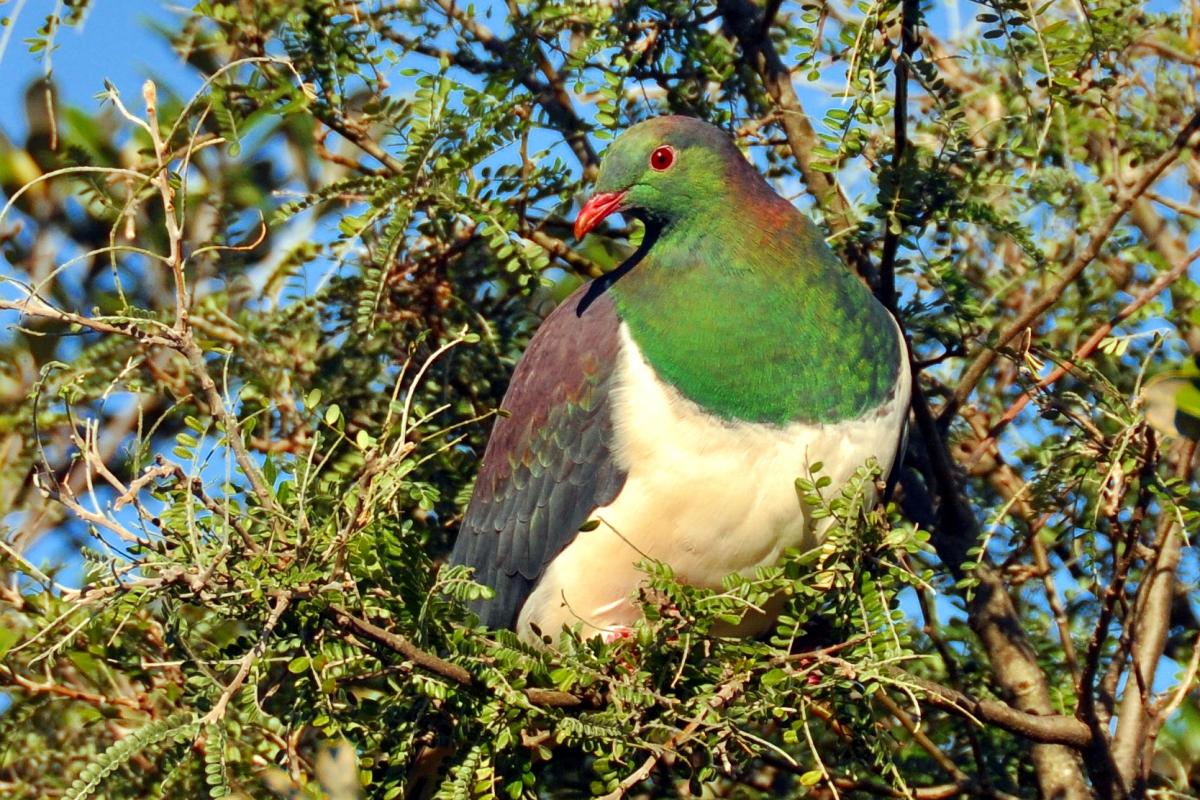
Sustainable kereru harvesting

Protecting threatened and endangered species is hard. That's because they are common resources - resources that are rival and non-excludable. Rival resources are those where one person's use of the good reduces the amount available to everyone else, i.e. in this case one hunter killing a threatened animal reduces the number of those animals available to everyone. Non-excludable resources are those where you cannot easily prevent a person from obtaining the benefit from them, i.e. in this case it is difficult to stop the hunters from hunting.

There are many proposed solutions to solving the common resources problem (see some of my previous posts on common resources for some examples). However, the most sustainable solution is likely to be making the species excludable, rather than non-excludable. If you can prevent the hunters from hunting, then sustainability of animal populations will be much easier to attain. But how do you achieve excludability?

One option is farming. Have you ever considered why many bird species are threatened or endangered, but chickens are not? It's because most bird species are non-excludable (it's difficult to stop someone shooting or trapping a bird in the forest), but chickens are excludable because people own them (and presumably, chicken farmers watch their chickens at least closely enough that hunters wouldn't try to hunt them). Farmers also have large incentives to ensure that they keep their flocks sustainable (by taking out only the number of chickens that leaves a reasonably stable, or even growing, population).

However, for most birds farming is not an option. Some don't do well in captivity, and most of us would probably prefer that wild populations are kept sustainable, rather than developing increasingly in-bred farmed populations. So, we need an alternative option.

Fisheries in many countries are managed through transferable quota systems. Quotas regulate the number of fish that are allowed to be removed from the sea in a given period of time. The total quota is set by determining a total allowable catch for a year (in theory at least this is roughly equal to the growth in the fishery stock), with some allowance made for recreational fishing. Quotas work well because they make fish excludable (no quota means no fishing) and are backed up by monitoring and enforcement.

So I found this article from last week by Len Gillman (head of science at AUT) interesting. Gillman notes:
The kereru is a native New Zealand species protected under legislation, but despite this protection it has continued to decline in abundance since European colonisation. As an iconic native species, it is treasured by many Maori and Pakeha as something that must be preserved at all costs...
The main cause of kereru decline is predation and competition from mammalian pests, not hunting, and controlling these pests with natural poisons such as 1080 has been shown to promote their recovery. With ongoing predator control, populations increase until they reach a point where, limited by resources, surviving fledglings entering the local population roughly equal those leaving the population due to emigration and mortality.
When a population reaches stability, small harvests can be made without affecting the total number of birds, because those removed by harvest allow more fledglings to survive. This concept is known as a sustainable harvest - it allows a small ongoing harvest without affecting the size of the population. Harvesting quotas would need to be based on kereru numbers and age distributions, considering young birds learn survival skills from older birds, but sustainable harvesting holds great promise.
There are a couple of points to add to this. First, once the sustainable harvest number of kereru have been determined, how would the harvest be allocated? In other words, who would determine who has the rights to harvest kereru, and for how many birds? This sort of allocation problem is key (see here for a similar example relating to water).

Second, to ensure efficiency the rights should be transferable between parties in a voluntary exchange. Assuming that the rights to harvest kereru are only provided to iwi, and can only be transferred between iwi, this would still ensure that iwi who have the most to gain from harvesting kereru would be those that did the harvesting (since they would be willing to buy the rights off other iwi who valued the harvest less). This would ensure the maximum net gain for society (as a whole) from the limited (and sustainable) kereru harvest.